Mazda CX-5 Pays 15% Japan Tariff, Above 12.5% on 25-Year-Old Imports
The new Mazda CX-5 starts at $29,990 and faces a 15% import tariff, while qualifying 25-year-old Japanese cars pay a combined 12.5%. Here is how the rules differ.
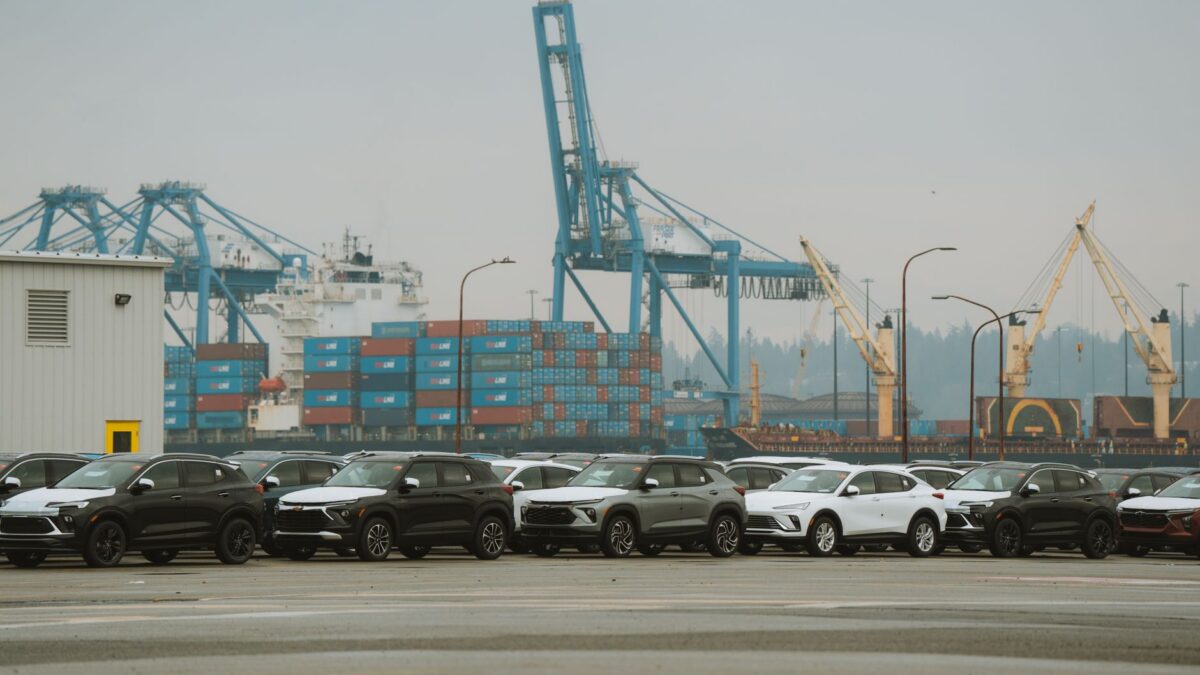
Mazda is selling its redesigned 2026 CX-5 in the US from $29,990, and because the crossover is built in Japan it carries a 15% combined automotive tariff, according to CarBuzz. A qualifying 25-year-old Japanese car, such as a Nissan Skyline GT-R or Honda Integra Type R, may face a combined duty of just 12.5%.
The gap is small in dollar terms, but it shows how differently US trade rules treat new and old imports from the same country.
How the 15% rate came about
The 15% rate took effect under the US-Japan trade agreement in September 2025, CarBuzz reported. It replaced a temporary combined duty of 27.5% that Japanese vehicles faced earlier in 2025. Before that increase, Japanese automakers paid the traditional 2.5% duty.
Automakers pay the tariff directly to the US government and then decide how much of the cost to absorb and how much to build into vehicle prices. For background on who ends up paying, see this explainer on how tariffs affect car prices.
Why a 25-year-old car pays less
US Customs and Border Protection exempts vehicles from the Section 232 automotive tariff when they were made in a calendar year at least 25 years before the year of importation. That leaves qualifying older Japanese cars under the separate Section 301 framework, with a combined duty of 12.5%. New Japanese-built cars pay the negotiated 15% Section 232 rate and are exempt from the Section 301 duty.
Vehicles made in 2001 reach the 25-year mark during 2026. The federal safety exemption works differently: the National Highway Traffic Safety Administration requires a car to be 25 years old from its actual manufacture date before it can be exempt from federal motor vehicle safety standards. The tariff exemption uses the calendar year of manufacture, so importers need to check both the classification and the exact age.
Why it matters: the dollar difference
CarBuzz gives an example of two Japanese passenger vehicles, each with a customs value of $30,000. The duty gap between the 15% rate and the 12.5% rate would be $750.
Customs value is not the same as sticker price. Duties are assessed on customs value, which can differ significantly from the manufacturer’s suggested retail price, so Mazda does not pay $4,500 on a CX-5 with a $30,000 window sticker. Older-car importers also face shipping, customs clearance, registration, insurance and mechanical work. And the 12.5% rate is well above the 2.5% standard duty that applied before April 2025.
What buyers of new Japanese models are paying
The 2026 CX-5 costs $940 more than the model it replaces, though it has been substantially reworked. Its wheelbase grows to 110.8 inches, the cabin gets built-in Google technology, and a 2.5-liter four-cylinder makes 187 hp and 186 lb-ft of torque. All-wheel drive and a six-speed automatic are standard. Mazda has said the 2027 CX-5 will carry the same price as the 2026 model.
- The 2026 Mazda MX-5 Miata Sport with a six-speed manual starts at $30,730, up $900 from the prior year. It is built at Mazda’s Hiroshima plant.
- The 2027 Lexus GX550 Premium starts at $69,085 including delivery, processing and handling.
- The GX550 Overtrail+ costs $85,010, up $1,565 from its predecessor. The GX550 is built at Toyota’s Tahara plant in Japan and faces the same 15% rate.
Those increases are larger than the $750 example, and CarBuzz did not break down how much of each rise is due to tariffs.
Mazda’s US-built alternative
Mazda also sells the CX-50 compact crossover, assembled at the Mazda Toyota Manufacturing facility in Huntsville, Alabama, so it has no import tariff exposure. The 2026 CX-50 2.5 S Select is priced at virtually the same level as the CX-5, has standard all-wheel drive and the same 2.5-liter engine with 187 hp.
In April 2025 Mazda temporarily stopped building CX-50s for Canada at the Alabama plant and redirected that production to the US market, responding to tougher trade conditions. CarBuzz reported no apparent plans to move CX-5 production to Alabama, so the 15% rate remains on that model for now.
Source: CarBuzz