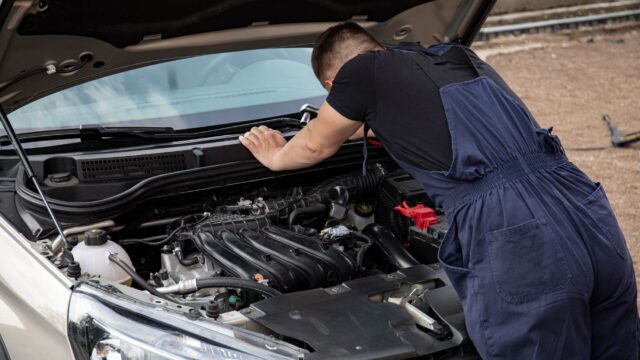
What Voids a Car Warranty and What a Dealer Cannot Deny
The Magnuson-Moss Warranty Act limits how automakers can tie your coverage to their own parts and service. A claim can still be denied when the failure traces back to neglect, a bad part or a modification.
Very little voids an entire car warranty. Under the federal Magnuson-Moss Warranty Act, an automaker or dealer cannot cancel your coverage or deny a claim just because you used an independent shop, did your own maintenance, or installed aftermarket or recycled parts. They can deny a specific repair when they show that a non-factory part, poor workmanship, skipped maintenance, misuse or a modification caused that failure.
Can I use an independent mechanic without voiding my warranty?
Yes. Routine maintenance and repairs can be done by an independent mechanic, a chain shop or you, and the warranty stays in force.
The rule comes from the Magnuson-Moss ban on “tie-in” conditions. A warrantor generally cannot require you to use a particular brand of parts or service to keep coverage, unless it provides those parts or services free under the warranty or the Federal Trade Commission grants a waiver. The FTC explains this in its guide to federal warranty law.
The catch is proof. If the engine fails and the automaker asks whether oil changes were done on schedule, you need records. Keep every receipt with the date, mileage, the parts and fluids used, and the shop’s name. For do-it-yourself work, keep the parts receipts and a written log.
Do aftermarket parts void a car warranty?
No. Installing an aftermarket or recycled part does not by itself void the warranty or allow the dealer to deny a claim.
The warranty can exclude damage caused by a part the automaker did not supply. If a cheap aftermarket filter fails and the engine is damaged as a result, the automaker can refuse to pay for that damage. It cannot refuse to fix an unrelated power window or transmission fault because you put on aftermarket wipers.
The FTC has acted against companies that claimed otherwise. In 2022 it took action against Harley-Davidson and the maker of Westinghouse outdoor generators for warranty terms that said coverage would be void if customers used independent repair shops or third-party parts. In 2015 BMW settled FTC charges over telling MINI owners their warranty would be void unless they used MINI parts and dealers.
When can a dealer deny a warranty claim?
A dealer or automaker can deny a claim when the failure was caused by something the warranty excludes. The burden is on them to connect the cause to the damage, and you are entitled to an explanation.
| Situation | Whole warranty void? | Can a related claim be denied? |
|---|---|---|
| Maintenance done at an independent shop | No | Only if the work was done wrong and caused the failure |
| Aftermarket or recycled parts installed | No | Yes, if the part caused the damage |
| Skipped or late maintenance | No | Yes, if neglect caused the failure, such as engine damage from missed oil changes |
| Engine tuning or performance software | Usually no | Often yes for engine and drivetrain failures linked to the change |
| Lift kit, oversized wheels or tires | No | Yes for suspension, steering or axle damage linked to the change |
| Racing, off-road competition or commercial misuse | Depends on the warranty booklet | Commonly excluded |
| Salvage or total-loss title | Often yes; many automaker booklets end coverage | Yes |
The exact exclusions are in the warranty booklet for your model year, which most automakers post on their owner websites. Read the “what is not covered” section before you modify the car. Coverage periods differ by component, which our comparison of bumper-to-bumper and powertrain warranties lays out by brand.
What about emissions equipment and modifications?
Federal emissions warranties cover parts such as the catalytic converter and engine control computer for set periods, and they come with the same tie-in protections. Altering or removing emissions controls is illegal under the Clean Air Act, and it gives the automaker grounds to deny emissions and engine claims.
Legal, bolt-on changes that do not touch emissions or safety systems usually affect only the parts they interact with. If you plan larger changes, ask the dealer’s service manager in writing which coverage would be affected.
What should I do if my warranty claim is denied?
Ask for the denial and the reason in writing, then escalate step by step.
- Get a written repair order that states the failure and why coverage was refused.
- Ask which part or action they say caused the failure, and what evidence supports it.
- Gather your maintenance records and receipts.
- Get a second opinion from another franchised dealer of the same brand or an independent shop.
- Call the automaker’s customer assistance line and open a case number. Many warranty booklets also name an arbitration program.
- File a complaint with the FTC at ReportFraud.ftc.gov and with your state attorney general.
Magnuson-Moss lets consumers sue over a breached written warranty and recover attorney fees if they win. If the same defect keeps returning, your state’s lemon law may apply; see our guide to how lemon laws work. For coverage bought on top of the factory warranty, read our explainer on whether an extended warranty is worth it, since service contracts have their own exclusions.
Bottom line
Where you service the car and whose parts you use do not void the warranty. What matters is whether something you did caused the failure, so keep records and ask for every denial in writing.
FAQ
Does changing my own oil void my car warranty?
No. You can do your own maintenance as long as you use fluids and parts that meet the owner’s manual specifications. Keep receipts and a log with dates and mileage.
Can a dealer refuse warranty work because I bought the car elsewhere?
The factory warranty is honored by franchised dealers of the brand regardless of where you bought the car. If a dealer refuses, contact the automaker’s customer assistance line.
Does a tune or engine software change void the warranty?
It does not void the whole warranty, but the automaker can deny engine and drivetrain claims it links to the change. Software that alters emissions controls is illegal under federal law.
Do aftermarket tires or wheels affect my warranty?
Not by themselves. If a size change damages suspension or steering parts, the automaker can deny claims for that damage.