Car Destination Fee: What It Is and Why You Cannot Negotiate It
Destination charges on new cars now run from about $1,200 to nearly $2,900 depending on brand and size. The fee is fixed, but the dealer's own add-ons next to it are not.

A car destination fee is the charge the automaker adds to every new vehicle for shipping it from the factory or port to the dealer. It is printed on the window sticker, it is the same for a given model no matter how far the dealer is from the plant, and it is not negotiable. As of 2026 model year pricing, it ranges from roughly $1,200 on some small cars to $2,795 or more on full-size trucks and SUVs.
What does the destination fee pay for?
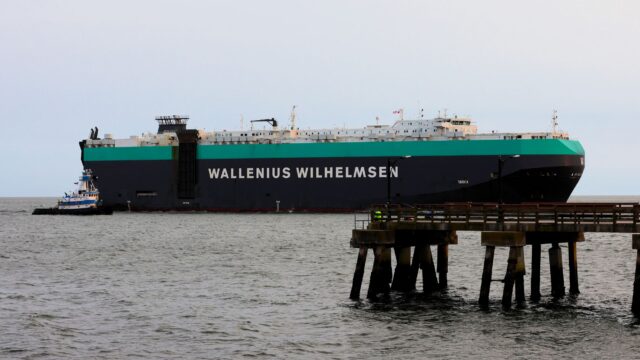
The fee covers transporting the car from the assembly plant or port of entry to the dealership, usually by rail and truck, and in some cases by ship. Automakers set one national charge for each model rather than billing by distance, so a buyer next door to the factory pays the same as a buyer across the country.
Ford, for example, has said it calculates an average so customers pay the same amount everywhere and that the fee is lower for smaller vehicles. The charge is part of what the dealer pays the automaker for the car.
Why can’t I negotiate the destination fee?
The destination fee is set by the manufacturer and passed through by the dealer, so the dealer has no room to remove it. Federal law (15 U.S.C. 1232) requires the window sticker, also called the Monroney label, to list transportation charges to the dealer alongside the base price and factory options, which makes the fee part of the official price.
You can still negotiate the total. A dealer can lower the selling price of the car itself, which offsets the destination charge. Focus on the out-the-door price, which includes the vehicle price, destination, taxes, registration and any dealer fees. Our explainer on MSRP versus invoice price shows where the room to negotiate sits.
How much is the destination fee by automaker?
Destination charges vary by brand and by vehicle size, and trucks and large SUVs from Detroit automakers carry the highest amounts. These are examples from 2026 and 2027 model year pricing as reported by the automakers and by industry coverage through October 2026.
| Brand or model | Destination fee | Model year |
|---|---|---|
| Ford F-150; Chevrolet Silverado and Suburban; GMC Sierra and Yukon | $2,795 | 2026 |
| Cadillac Escalade IQL | $2,895 | 2026 |
| Jeep Grand Wagoneer | $2,795 | 2026 |
| Ram full-size pickups | $2,595 | 2026 |
| Chevrolet Colorado | $2,095 | 2026 |
| Most Ford, GM, Jeep and Chrysler models | $1,995 | 2026 |
| Chevrolet Equinox, GMC Acadia | $1,995 | 2027 |
| BMW (most models) | $1,350 to $1,550 | 2026 |
| Honda CR-V | $1,395 | 2026 |
| Mazda | $1,235 to $1,530 | 2026 |
Automakers can raise destination charges during a model year and often change them with a new model year, so check the window sticker or the automaker’s build-and-price tool for the exact car you want.
Why have destination fees gone up?
Destination fees have risen faster than many car prices in recent years. Automakers point to higher freight costs, trade costs and tariffs; GM raised its charges three times between April 2025 and early 2026, and Mitsubishi adjusted its fees in response to tariffs on Japanese imports.
Industry analysts have suggested the fees can also add margin, especially on large trucks and SUVs, because a higher destination charge raises the price without changing the advertised MSRP. On some models the fee now exceeds 5% of the base price. Our guide to how tariffs affect car prices covers the trade side.
How is the destination fee different from dealer add-ons?
The destination fee comes from the automaker and appears on the federal window sticker. Dealer add-ons and fees come from the dealer, usually appear on a second sticker or the purchase contract, and are negotiable or optional.
| Charge | Who sets it | Negotiable? |
|---|---|---|
| Destination charge | Automaker | No |
| “Dealer prep” or a second delivery fee | Dealer | Yes; ask for it to be removed |
| Added market adjustment (markup) | Dealer | Yes |
| Pre-installed add-ons (nitrogen, VIN etching, paint protection) | Dealer | Yes; ask for a car without them |
| Documentation fee | Dealer, capped in some states | Sometimes |
A “delivery” or “prep” fee on the dealer’s own addendum is not the destination charge, even if the name sounds similar. Our guides to dealer markups and add-ons and doc fees by state explain what you can push back on.
Bottom line
Treat the destination fee as part of the car’s price: it is fixed, listed on the window sticker and the same at every dealer. Compare out-the-door prices and challenge any second shipping or prep charge the dealer adds on top.
FAQ
Does the destination fee depend on how far I live from the factory?
No. Automakers set one national destination charge per model, so the fee is the same whether the dealer is near the plant or across the country.
Is the destination fee included in MSRP?
Advertised MSRP often excludes it, while the window sticker shows the base price, options and destination charge, then a total. Ask whether a quoted price includes destination.
Do used cars have a destination fee?
No. The destination charge applies to new vehicles shipped from the automaker. A dealer fee on a used car labeled “freight” or “delivery” is a dealer charge and can be negotiated.
Is the destination fee taxable?
Many states tax the full selling price of the vehicle, and the destination charge is part of that price on the window sticker. Rules vary, so check with your state revenue department.