Tesla Executive Floats Lasers to Keep Robotaxi Cameras Clear
Tesla's Lars Moravy said lasers could clear water from robotaxi cameras instead of wipers. He gave no timeline. The patent history and fleet context.
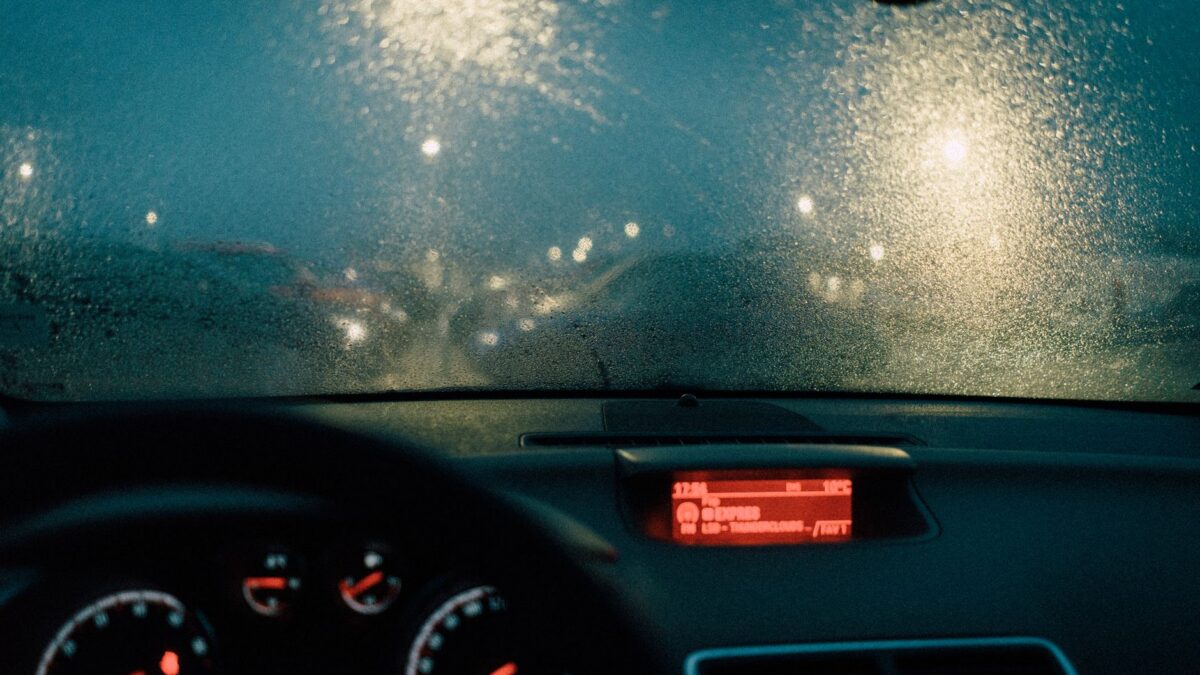
Tesla may use lasers rather than wipers to keep robotaxi cameras free of rain, Teslarati reports. Lars Moravy, Tesla’s vice president of vehicle engineering, mentioned the idea on an episode of Jay Leno’s Garage that came out Monday. He set no date and called it an option under consideration, not a confirmed feature.
Design chief Franz von Holzhausen joined Moravy to show Leno the Model Y L.
How the laser idea would work
According to Moravy, a laser aimed at one small zone can clear a film of water and leave a barrier behind. For self-driving cars, he said, treating just the patch of glass in front of a camera could make sense. Treating a whole windshield would need too many lasers.
A Tesla patent describes pulsed laser cleaning of glass in vehicles and solar assemblies. It was filed in May 2019 and granted in September 2021, and a divisional version was granted on March 31, 2026. The system senses debris, works out what it is, and fires pulses at a calibrated rate so the beam stays within the glass. Windshields, side windows, camera lenses and solar panels are named as targets.
Earlier wiper efforts
Lasers were rumored for the Cybertruck, which was unveiled in November 2019 with no wipers at all. It later got one oversized blade, and Elon Musk said the wiper bothered him more than any other part of the truck. Teslarati says the Cybertruck line is due to close around mid 2027 to free space for Cybercab output.
Tesla has so far relied on standard parts. In January, Model Y Robotaxis in Austin were seen with washers on the side repeater cameras. A patent granted in May covers a fluid and wiper assembly for cameras on vehicles and on Optimus, Tesla’s humanoid robot. A laser would drop the fluid and the blades, which need regular replacement across a whole fleet.
What it means for driverless cars
Someone driving a private car can see a smeared windshield and act. A Cybercab on its way to a pickup has no one inside to do that, so camera cleaning matters more for it.
The fleet keeps growing. Tesla opened unsupervised Robotaxi service in San Antonio on Monday, its eighth city, and enlarged the Austin service area to about 443 square miles the same day. Teslarati points out that Houston, Miami and Tampa, among the markets served, get heavy seasonal rain.
Leno’s ride on Full Self-Driving (Supervised)
The episode also gave Leno his first ride on Full Self-Driving (Supervised). The Model Y L pulled over by itself as an ambulance with sirens approached, and Leno said he was touching nothing.
Moravy and von Holzhausen added that owners are responsible while FSD (Supervised) is engaged, while Tesla is responsible for Robotaxi rides as the operator. The Model Y L went on sale in the US in July at $61,990.
Source: Teslarati