NHTSA vs IIHS Safety Ratings: Different Tests, Different Scores
A five-star car can miss an IIHS award, and the reverse happens too. Each program measures different crashes, so the two ratings work best together.
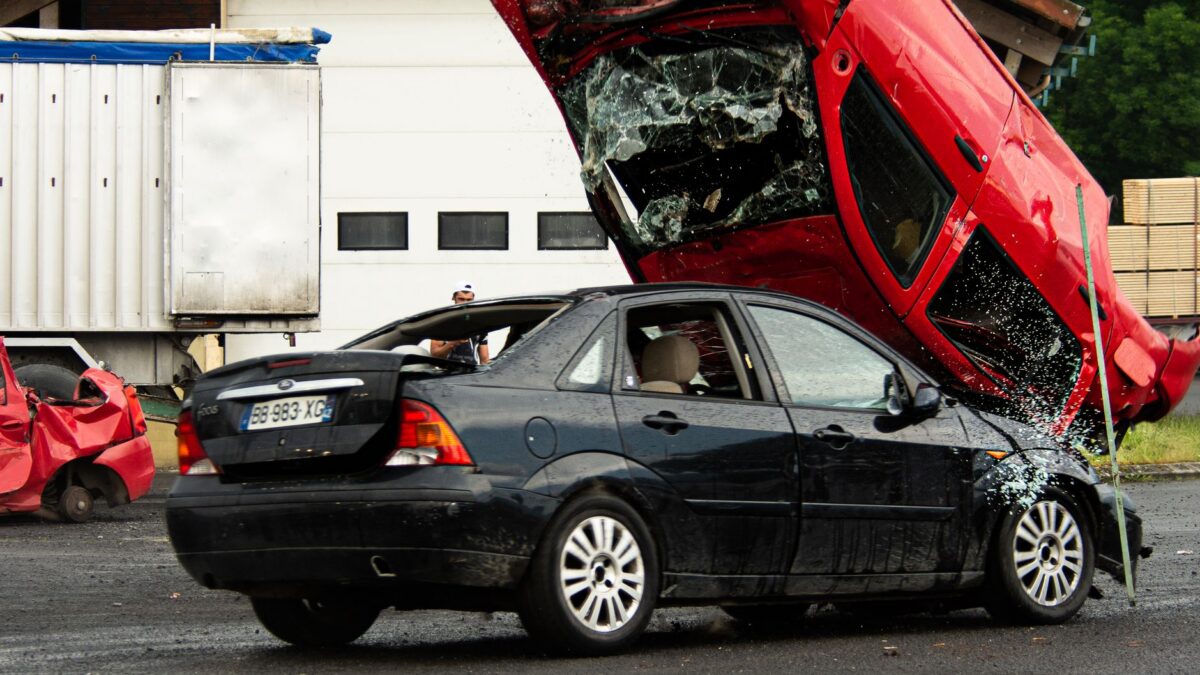
NHTSA’s 5-Star Safety Ratings come from the federal government’s New Car Assessment Program and score frontal, side and rollover performance from one to five stars. IIHS, a nonprofit funded by auto insurers, runs different crash tests, rates results Good, Acceptable, Marginal or Poor, and names TOP SAFETY PICK and TOP SAFETY PICK+ winners each year under tougher criteria.
Because the tests differ, check both before you buy. You can look up any model for free at nhtsa.gov/ratings and iihs.org/ratings.
What does NHTSA test for its 5-Star ratings?
NHTSA rates crash protection in frontal and side impacts and the risk of rolling over, then combines them into an overall star rating.
- Frontal crash. A full-width crash into a fixed barrier at 35 mph, with ratings for the driver and front passenger.
- Side crash. A moving barrier strikes the standing car at 38.5 mph, and in a separate test the car slides sideways into a pole at 20 mph.
- Rollover. A rating of rollover risk based on the Static Stability Factor, a lab measure of how top-heavy the vehicle is, combined with a driving maneuver test.
NHTSA does not test every model every year. It publishes a list of vehicles selected for testing each model year, and models not tested show “Not Rated.” NHTSA had planned to add driver assistance tests and pedestrian protection to the program starting with model year 2026, but a September 2025 Federal Register notice postponed those updates to model year 2027 vehicles.
What does IIHS test?
IIHS runs its own crash tests and also rates headlights and crash-avoidance systems. Crash results are scored Good, Acceptable, Marginal or Poor.
- Small overlap front. Only a small part of the front corner hits a barrier, which loads the car’s structure differently from a full-width test.
- Moderate overlap front. A larger offset frontal crash. IIHS has replaced the original version with a more demanding updated test.
- Side. A side impact test, also in an updated, more demanding version.
- Headlights. Measures how far and how well low and high beams light the road without glaring at oncoming drivers.
- Front crash prevention. Tests automatic emergency braking against vehicles and pedestrians.
What does a car need for a 2026 TOP SAFETY PICK?
The 2026 IIHS award criteria require Good ratings in all three crash tests plus strong headlights and crash prevention as standard equipment. From the IIHS 2026 criteria page, as of November 2026:
| Requirement | TOP SAFETY PICK | TOP SAFETY PICK+ |
|---|---|---|
| Small overlap front test | Good | Good |
| Moderate overlap front test | Good | Good |
| Side test | Good | Good |
| Headlights (standard on all trims) | Acceptable or Good | Acceptable or Good |
| Pedestrian front crash prevention (standard) | Acceptable or Good | Good |
| Vehicle-to-vehicle front crash prevention 2.0 (standard) | Not required | Acceptable or Good |
“Standard availability” matters. A model where only top trims get the better headlights or crash-avoidance system does not qualify, so the award applies to how the base model is equipped.
Why can the two ratings disagree?
A car can earn five stars from NHTSA and still miss an IIHS award, because each program tests different crash types and sets its own pass marks.
- NHTSA’s frontal test is a full-width crash, while IIHS runs offset tests that hit one side of the front.
- IIHS adds headlight and pedestrian crash-prevention requirements that NHTSA’s star ratings do not include.
- IIHS updates its award criteria often, so a model that won a few years ago may not qualify under today’s rules.
- NHTSA says frontal star ratings can be compared only between vehicles within about 250 pounds of each other. A small car and a large SUV with the same frontal stars do not offer the same protection in a crash with each other.
How do I look up a car’s ratings?
- Go to nhtsa.gov/ratings, enter the year, make and model, and open the result for your body style and drivetrain.
- Read the overall stars and the separate frontal, side and rollover ratings.
- Go to iihs.org/ratings, choose the same year, make and model, and read each test result and any award.
- Check which trims the IIHS award covers and whether the headlights on your trim were rated.
- Check for open recalls on any used car. Our guide to checking car recalls by VIN walks through it.
The window sticker on a new car also shows NHTSA’s star ratings, or “Not Rated” if the model was not tested.
Do safety ratings change my insurance price?
They can play a part, since insurers price policies partly on how often a model is involved in injury claims, which is related to how well it protects occupants. Many other factors matter more, including your record and where you live. Our guide to why car insurance goes up covers the main drivers.
Bottom line
Use NHTSA stars and IIHS ratings together: they test different crashes, and a car that does well in both is the safer bet. For 2026, an IIHS award requires Good ratings in all three IIHS crash tests and standard headlights and pedestrian crash prevention rated at least Acceptable. If a safety system misbehaves on your car, you can report it to NHTSA.
FAQ
Is IIHS a government agency?
No. IIHS is an independent nonprofit research organization supported by auto insurers. NHTSA is the federal agency that sets safety standards and runs the 5-Star program.
Why does my car say “Not Rated” on nhtsa.gov?
NHTSA did not crash test that model for that year, or tested only some ratings. Check whether a closely related model or the previous year was rated, and look up IIHS results too.
Are older IIHS awards still meaningful?
They reflect the criteria of that year. IIHS has raised the bar several times, so compare a used car’s results test by test rather than relying on the award name.
Do ratings cover EVs and hybrids?
Yes. Both NHTSA and IIHS test electric and hybrid models with the same procedures as gas vehicles.