Automatic Emergency Braking Rule: What FMVSS 127 Requires
The federal emergency braking standard is final but under review, with a proposed two-year delay. Here is what it asks of new cars and what owners can do about false braking today.
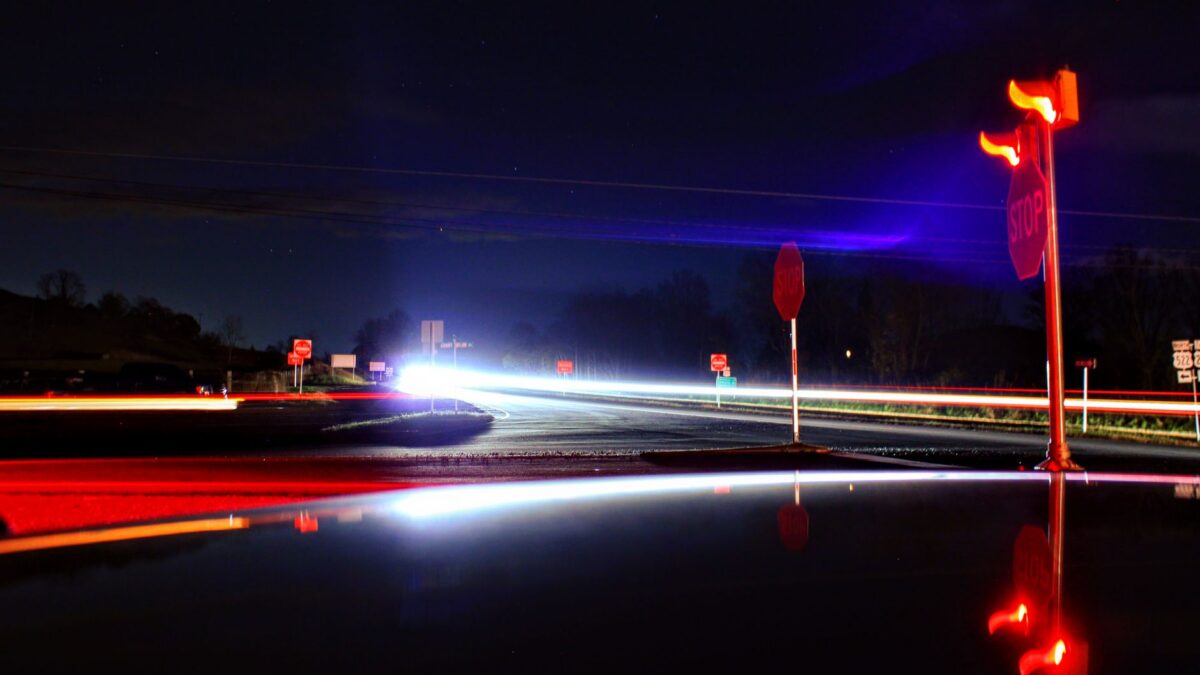
FMVSS 127, NHTSA’s automatic emergency braking rule, requires every new passenger car and light truck built on or after September 1, 2029 to brake on its own and avoid hitting a vehicle ahead at speeds up to 62 mph, and to detect and avoid pedestrians in daylight and darkness. As of November 2026 the rule is in force on paper, but the Department of Transportation has said it plans to propose a two-year delay.
Most new cars already have some form of automatic emergency braking (AEB). The rule matters because it sets a minimum level of performance, adds night-time pedestrian tests and limits how often the system may brake for nothing.
What does FMVSS 127 require?
The standard requires three linked systems on light vehicles up to 10,000 pounds gross weight: a forward collision warning, automatic braking for vehicles ahead and automatic braking for pedestrians. All three must work without the driver touching the brake pedal.
The regulation text in 49 CFR 571.127 sets these operating ranges and tests:
| Requirement | What the standard says |
|---|---|
| Lead vehicle AEB operating range | Must work from about 6 mph to 90 mph (10 to 145 km/h) |
| Lead vehicle crash avoidance in tests | No contact with a stopped, slower or braking vehicle ahead; stopped-vehicle tests run up to 62 mph (100 km/h) |
| Pedestrian AEB operating range | Must work from about 6 mph to 45 mph (10 to 73 km/h) |
| Pedestrian tests | Crossing, obstructed-view, stationary and walking-along-the-road scenarios, in daylight and darkness |
| Forward collision warning | Audible alert plus a red visual symbol in the driver’s forward view |
| False activation | Car must not brake hard for a steel plate on the road or when passing between two parked vehicles |
| Malfunction warning | A telltale light when the system is blocked or not working |
The rule also restricts the off switch. A driver cannot permanently turn AEB off below the required performance. The system has to come back on at the start of every drive, with narrow exceptions such as low-range four-wheel drive, tow mode and police vehicles.
When do new cars have to comply?
The compliance date is September 1, 2029 for most automakers, and September 1, 2030 for small-volume manufacturers, final-stage manufacturers and alterers, under the current text of the standard as of November 2026.
NHTSA published the final rule in May 2024 and a revised version in November 2024 after automakers asked it to reconsider. The industry group Alliance for Automotive Innovation then challenged the rule in the US Court of Appeals for the D.C. Circuit in January 2025. That case has been on hold since early 2025 while the new administration reviews the standard.
In a March 23, 2026 status report to the court, DOT said it is preparing a proposal that would amend parts of the rule, including two more years of lead time for automakers. A delay of that length would move the main deadline to 2031. Until a proposal is published and finalized, September 2029 remains the legal date. Check the Federal Register for any notice on FMVSS 127 before relying on either date.
Does my current car have to meet this rule?
No. Federal safety standards apply to vehicles when they are built, so the rule does not require owners to add or upgrade AEB on cars already on the road.
Many recent models already carry AEB under a voluntary commitment most automakers made in 2016, but those systems were designed to an easier target, mainly lower-speed rear-end crashes. Whether your car’s system detects pedestrians at night depends on the model. NHTSA’s 5-Star program and the IIHS crash avoidance tests are the best places to compare models today; our guide to NHTSA and IIHS safety ratings explains how each one tests.
What is phantom braking?
Phantom braking is when an automatic braking system slows or stops the car hard for no real obstacle. Drivers report it on open roads, under overpasses, near shadows and when passing parked cars or trucks in the next lane.
A false stop at highway speed can cause a rear-end crash, which is why the new standard includes false activation tests. In the steel plate and pass-through tests, automatic braking may not add a peak deceleration of 0.25 g or more beyond what the driver’s own braking would produce.
Unexpected braking has also been the subject of NHTSA defect investigations on several models in recent years. Those investigations often start with owner complaints, so a detailed report helps.
How do I report phantom braking to NHTSA?
File a vehicle safety complaint at nhtsa.gov/report-a-safety-problem. It is free, and NHTSA reviews every complaint for patterns that may justify an investigation.
- Note the date, time, speed, road type and weather of each event while you remember them.
- Save any dashcam video and photos of warning messages on the dash.
- Have your VIN ready; it is on the driver’s side dashboard and the door jamb.
- Go to nhtsa.gov/report-a-safety-problem, choose Vehicle, and enter the VIN.
- Pick the component closest to the problem, such as the automatic braking or brake system entry, and describe what happened in plain words, including whether anyone was hurt or another car was involved.
- Report the problem to a franchised dealer too, and keep the repair order, even if the dealer finds no fault code.
Our step-by-step guide on how to report a vehicle safety problem covers what happens after you submit. Complaints feed the process described in our explainer on NHTSA investigation stages, which can end in a recall.
Can a software update fix false braking?
Sometimes. Automakers have changed AEB behavior through dealer software updates and, on connected cars, over-the-air updates. If the fix addresses a safety defect, it is a recall and must be free.
Check your VIN for open recalls at nhtsa.gov/recalls before assuming the problem is unknown. Recall remedies are free at a franchised dealer of the brand. Do not disable or cover sensors to stop false braking. That removes the protection the system gives in a real emergency, and the dealer should look at a camera or radar that is misaligned after a windshield or bumper repair.
Bottom line
FMVSS 127 sets a much higher bar for automatic braking from September 2029, but a two-year delay is on the table. For the car you drive now, the useful steps are checking recalls by VIN and reporting any phantom braking to NHTSA with as much detail as you can.
FAQ
Is automatic emergency braking mandatory now?
Not yet under federal law. FMVSS 127 applies to vehicles built from September 1, 2029, and DOT has said it intends to propose pushing that back by two years. Many automakers already fit AEB voluntarily.
Does the rule apply to heavy trucks?
No. FMVSS 127 covers vehicles with a gross vehicle weight rating of 10,000 pounds or less. AEB for heavy trucks has been handled in a separate proposal from NHTSA and the Federal Motor Carrier Safety Administration.
Can I turn off automatic emergency braking?
On most current cars you can switch it off in the settings, and it may turn itself back on at the next start. Under FMVSS 127, cars built after the compliance date must default to on at every start, with only limited exceptions.
Will a dealer fix phantom braking for free?
It is free if the car is under warranty or the fix is part of a recall. Out of warranty, ask the automaker about goodwill coverage and check for technical service bulletins on the problem.