Over-the-Air Recalls: How Software Fixes Count as Recalls
A software update sent to your car can be a formal safety recall with a recall number and owner letter. Here is how OTA recalls work and how to confirm the fix reached your car.
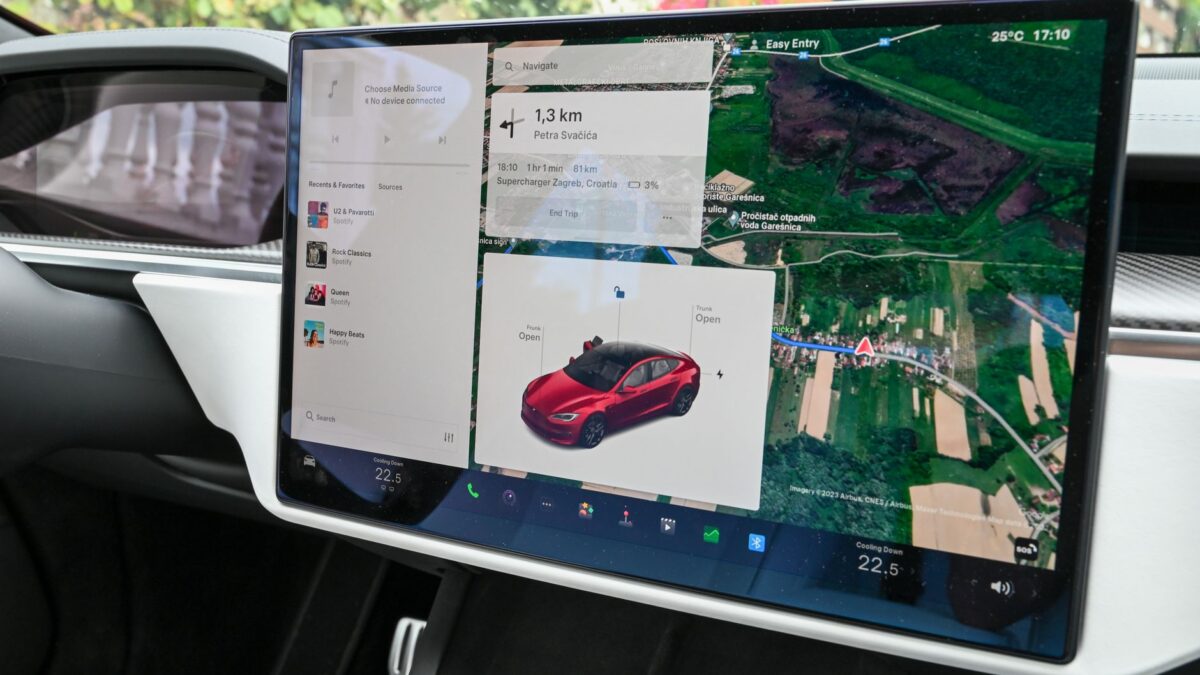
An over-the-air (OTA) recall is a safety recall in which the automaker fixes the defect by sending a software update to the car through its cellular or Wi-Fi connection instead of having a dealer do the work. It is still a formal recall: the automaker files it with NHTSA, mails owner letters and provides the fix free.
NHTSA’s recall records flag recalls whose remedy is delivered over the air. Tesla, Ford, General Motors, Stellantis, Rivian and Lucid have all filed recalls with OTA remedies, although many recalls on connected cars still need a dealer visit for parts.
Why does a software update count as a recall?
A software update counts as a recall because federal law ties the recall to the safety defect, not to the way it is repaired. Under 49 U.S.C. 30118, a manufacturer that decides a vehicle has a safety-related defect, or does not comply with a Federal Motor Vehicle Safety Standard, must notify NHTSA and owners and offer a remedy.
The paperwork is the same as for a dealer repair. The automaker files a defect report under 49 CFR Part 573, NHTSA assigns a campaign number such as 23V-838, and owners get a notification letter by mail. The Tesla Autosteer recall 23V-838 is a good example: the remedy was an OTA update, and owner letters were still mailed on February 10, 2024.
Routine updates that add features or fix bugs unrelated to safety are not recalls, and automakers push those without filing anything with NHTSA.
Which automakers fix recalls over the air?
Any automaker whose affected module can be updated remotely can offer an OTA remedy, and NHTSA’s recall data shows several brands doing it. Some recalls are OTA only, while others let the owner choose between a remote update and a dealer visit.
| NHTSA recall | Automaker and vehicles | Defect | Remedy |
|---|---|---|---|
| 23V-838 | Tesla; 2,031,220 Model S, X, 3 and Y with Autosteer (model years 2012 to 2023) | Autosteer controls may not be enough to prevent driver misuse | OTA software update |
| 23V-085 | Tesla; 362,758 vehicles with FSD Beta | System may act unsafely around intersections | OTA software update |
| 24V-436 | Chrysler (FCA US); 1,033,433 Jeep, Ram, Dodge and Chrysler vehicles | Radio software may stop the rearview image from displaying | Dealer or OTA radio software update |
| 24V-589 | General Motors; 21,469 2023 to 2024 Cadillac Lyriq AWD | Anti-lock brakes may activate unexpectedly and release brake pressure | OTA or dealer brake module update |
| 22V-333 | Ford; 464 2021 Mustang Mach-E AWD | Powertrain software may miss an error, causing unintended acceleration, deceleration or loss of drive power | Dealer or OTA update |
| 23V-883 | Rivian; 7,873 2022 R1T and R1S | Accelerator pedal may not detect release | OTA update plus accelerator pedal replacement |
Figures are from NHTSA recall records as filed. The Rivian entry shows why an OTA-capable car can still need a shop visit: the software update came with a hardware part swap.
How do I confirm the OTA recall update installed?
Confirm the update by matching the software version in the car to the one named in the recall notice, then checking the VIN record after the automaker logs the fix.
- Read the owner letter or app message. It gives the NHTSA campaign number, the automaker’s own recall number and whether the remedy is OTA, dealer-installed or both.
- Follow the automaker’s install instructions. Updates usually need the car parked, connected and left alone until the install finishes.
- Check the software version in the car’s settings or the automaker’s app and compare it with the version or release notes the automaker lists for the recall.
- Run the VIN through the free NHTSA recall lookup a few days later. An open recall should drop off once the automaker records the remedy as complete.
- If the update fails, will not download or the recall still shows as open, call the automaker or book a dealer visit. Where the remedy can be dealer-installed, the dealer does it free.
Why does the VIN check still matter for a car that updates itself?
The VIN check matters because an OTA remedy only works if the update actually reached that specific car. A car that sat unused, lost its connection, or had an owner who postponed the install can still carry an open recall.
Used-car buyers should check every time. A previous owner may have skipped an update, and some recalls on connected cars, like the Rivian pedal recall, also require parts that only a service center can fit. Our guide on selling a car with an open recall covers what dealers and private sellers must do.
The lookup also catches recalls that are not software at all. A car can have an OTA recall completed and a separate airbag or brake recall still waiting for a dealer.
Is an OTA recall free, and what if the problem comes back?
Yes, an OTA recall remedy is free, like every safety recall remedy. The NHTSA records in the table above describe each OTA fix as free of charge, and the rules in our guide to who pays for recall repairs apply the same way.
If the defect returns after the update, report it to NHTSA with the VIN, software version and dates. NHTSA uses owner complaints to judge whether a remedy works, and software recalls can grow out of its investigations: the 23V-838 Autosteer recall was linked to NHTSA engineering analysis EA22-002. Our guide to reporting a safety problem to NHTSA explains how.
How is an OTA recall different from a service bulletin?
A recall is a legal duty triggered by a safety defect, while a service bulletin is guidance to dealers about a known problem. Automakers can also release software fixes through bulletins or routine updates, and those do not carry a free-remedy duty unless they are part of a recall or warranty repair. See how technical service bulletins work.
Bottom line
A remote update can close a safety recall, but it carries the same legal weight as a dealer repair. Read the letter, confirm the software version, and run the VIN afterward, because the record, not the update notification, shows whether your car is fixed.
FAQ
Do I have to go to a dealer for an over-the-air recall?
Usually not, if the remedy is OTA only and the update installs. Some recalls offer both routes, and a dealer can install the update if the car cannot receive it remotely.
Will an OTA recall show up on my car’s recall history?
Yes. It has an NHTSA campaign number and appears in the VIN lookup while it is open. Once the automaker records the update as complete, it should no longer show as an open recall.
Can I refuse an OTA recall update?
Owners can sometimes postpone an install, but leaving a safety recall unfixed keeps the defect in the car and the recall open on the VIN. Install it as soon as the automaker releases it.
Do only electric cars get OTA recalls?
No. NHTSA records include OTA remedies on gas vehicles too, such as the 24V-436 radio software recall covering Jeep, Ram, Dodge and Chrysler models.