NACS vs CCS: Which EVs Can Use Tesla Superchargers Now
The plug war is mostly over. Which brands have Supercharger access, which new models have the Tesla-style port built in, and what owners of CCS cars should know.
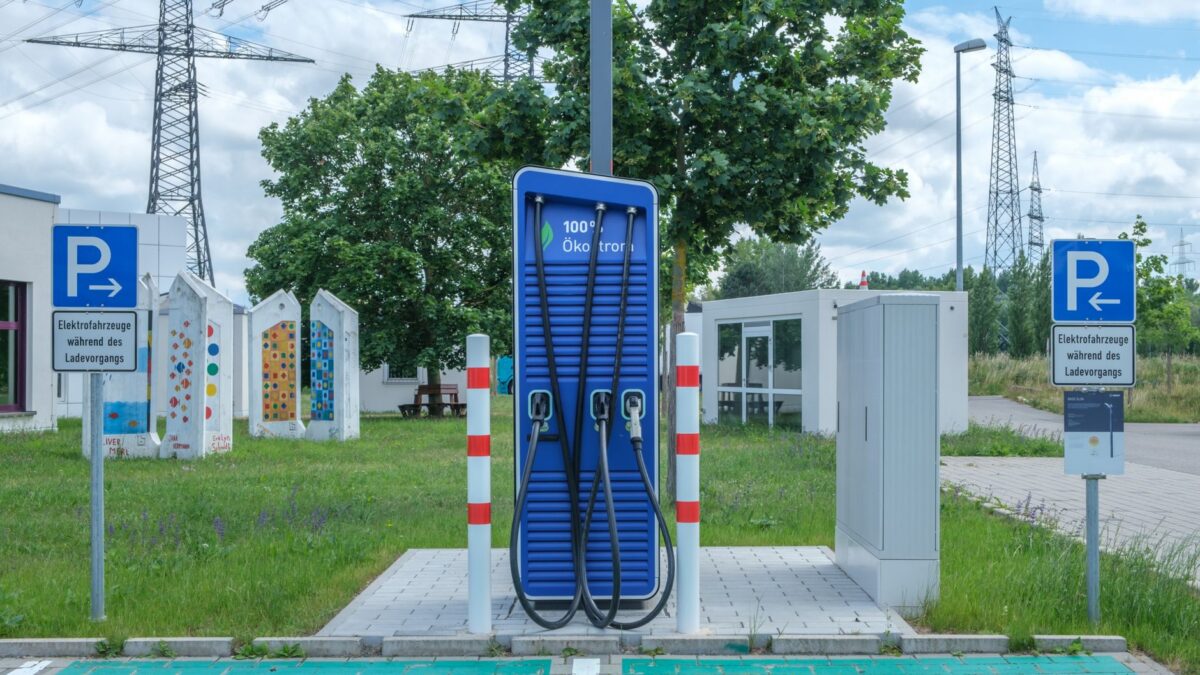
NACS is the Tesla-designed charging plug, now standardized as SAE J3400, and CCS is the plug most other EVs sold in the US have used. As of November 2026, most major automakers have switched to NACS for new models and have opened Tesla’s Supercharger network to their existing CCS cars through an adapter.
For owners, this means more fast-charging locations, but also a period where some cars need an adapter and some stations need the right cable.
What is the difference between NACS and CCS?
Both plugs handle home charging and DC fast charging. CCS (Combined Charging System) adds two large DC pins below a J1772 plug, which makes it bulky. NACS (North American Charging Standard, now formally the North American Charging System) uses one compact connector for AC and DC charging. SAE published J3400 as a recommended practice in September 2024, which let other automakers and charger makers build it to a common spec.
The Alternative Fuels Data Center at the Department of Energy lists J1772, CCS, CHAdeMO and J3400 as the connectors in use at US stations. Speed depends more on the car and the charger than on the plug shape.
Which automakers have Supercharger access?
Each brand’s EVs gained access to Tesla Superchargers in the US on the dates below, based on automaker and Tesla announcements compiled as of November 2026. Tesla publishes the current list in its app and on its site, and it can change.
| Automaker | Supercharger access began |
|---|---|
| Ford, Lincoln | February 2024 |
| Rivian | March 2024 |
| General Motors (Chevrolet, GMC, Cadillac) | September 2024 |
| Volvo, Polestar | October 2024 |
| Nissan | December 2024 |
| Lucid | January 2025 (Gravity); July 2025 (Air) |
| Mercedes-Benz | February 2025 |
| Hyundai, Genesis | March 2025 |
| Kia | April 2025 |
| Honda, Acura | July 2025 |
| Jaguar Land Rover | August 2025 |
| Toyota, Lexus, Subaru | October 2025 |
| Volkswagen Group (VW, Audi, Porsche) | November 2025 |
| BMW Group | December 2025 |
| Stellantis | March 2026 |
Access is by brand, but not always every model. Older EVs from some brands, or models with lower-voltage systems, may be excluded or charge slowly. Check the compatibility list for your exact model in the Tesla app or your automaker’s app.
Which new EVs have a NACS port built in?
New EVs are moving to a built-in NACS port, which removes the need for an adapter at Superchargers. Examples include the Hyundai Ioniq 5 from the 2025 model year, the Hyundai Ioniq 9, the Lucid Gravity and the latest Nissan Leaf, and most automakers have announced the switch for their next models. A car with a NACS port can use CCS stations with a NACS-to-CCS adapter, and many come with one.
When you shop, check the charge port on the specific model year. Some brands changed mid-cycle, so a 2025 and a 2026 version of the same model can have different ports.
How do I charge a CCS car at a Supercharger?
A CCS car needs a CCS1-to-NACS DC adapter and an account in either the Tesla app or the automaker’s app. The steps are:
- Get the adapter your automaker approves. Many sold or gave one to owners; others point to specific third-party models.
- Set up payment in the Tesla app or your automaker’s app, whichever your brand uses.
- Find a station that accepts non-Teslas. The app shows compatible sites; most newer V3 and V4 stations work.
- Plug the adapter into the Supercharger cable first, then into your car, and start the session in the app.
Tesla’s cables were sized for Tesla port locations. On cars with the port on a different corner, the cable may not reach unless you park across two stalls. Newer V4 stations have longer cables. Prices for non-Tesla drivers are shown in the app before you start, and they can be higher without a paid membership. For a cost comparison with home charging, see our guide to the cost to charge an EV.
What should CCS owners know?
CCS cars still have wide fast-charging coverage. CCS networks such as Electrify America, EVgo and many ChargePoint sites still serve them, and some networks are adding NACS cables alongside CCS. Home charging is unaffected, since Level 2 chargers use J1772 or NACS plugs and adapters for AC charging are inexpensive.
- Use only adapters approved by your automaker for DC fast charging. Unapproved adapters can overheat, and damage from them may not be covered under warranty.
- Keep the adapter in the car, since you may need it on a road trip.
- Expect resale buyers to ask about the port and adapter. Keep the adapter with the car when you sell.
Battery coverage is not affected by which network you use, as long as you charge as the manual allows. Our guide to EV battery warranties covers the terms by brand.
Bottom line
If you drive a CCS car from a major brand, you can likely use Superchargers today with an approved adapter. If you are buying new, a built-in NACS port is the simpler setup, and it still works at CCS stations with an adapter.
FAQ
Can I use any third-party NACS adapter?
Use the adapter your automaker approves. Fast charging moves a lot of current, and automakers specify which adapters are safe for their cars and may decline warranty claims tied to others.
Do Superchargers charge non-Tesla EVs as fast as Teslas?
Speed depends on the car’s battery and charging system. Many non-Tesla EVs charge at their normal DC rate, but some 800-volt cars charge more slowly at older Supercharger sites.
Will CCS stations disappear?
Not soon. Large numbers of CCS cars are on the road, and networks are adding NACS cables while keeping CCS ones.
Is NACS the same as J3400?
Yes. SAE J3400 is the published standard based on Tesla’s NACS design, which lets any automaker or charger maker build to the same specification.