EV Charging Levels Explained: Level 1, Level 2 and DC Fast Times
How fast an EV charges depends on the charger level, the car's own limit and how full the battery is. Here are the numbers from the Department of Energy.
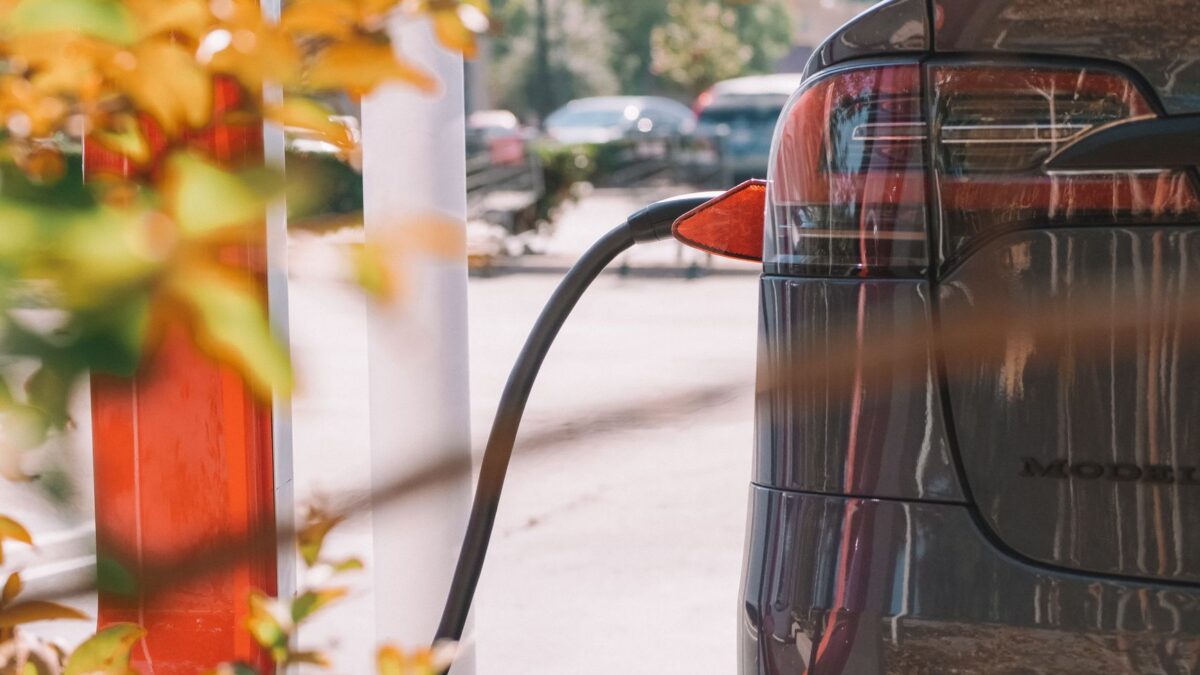
Level 1 charging from a 120-volt outlet adds about 5 miles of range per hour, Level 2 charging at 208 or 240 volts adds about 25 miles per hour, and DC fast charging adds roughly 100 to 200 or more miles in 30 minutes, according to the Department of Energy’s Alternative Fuels Data Center. The actual speed also depends on the car’s maximum charge rate and how full the battery is.
What are the three EV charging levels?
The levels describe the power supply. Levels 1 and 2 feed alternating current (AC) to the car’s onboard charger, while DC fast chargers deliver direct current straight to the battery. These figures come from the AFDC’s charging overview.
| Level | Voltage | Typical power | Range added | Where you find it |
|---|---|---|---|---|
| Level 1 | 120 V AC | About 1.9 kW | About 5 miles per hour | Standard household outlet |
| Level 2 | 208 V (commercial) or 240 V (home) AC | 2.9 to 19.2 kW; most home units about 7.2 kW at 30 amps | About 25 miles per hour | Home wall units, workplaces, public parking |
| DC fast | High-voltage DC from a three-phase supply | Up to 500 kW of charger output | About 100 to 200+ miles per 30 minutes | Highway corridors, retail sites |
As of 2023, nearly 80% of public charging ports in the US were Level 2, more than 20% were DC fast, and under 1% were Level 1, per the AFDC.
How long does it take to charge an EV?
Charging time is roughly the energy you need divided by the charging power, plus some loss. The examples below are arithmetic for a car with a 75 kWh usable battery charging from 10% to 80% (about 52 kWh added), not tests of any model.
| Charger | Power | Approximate time, 10% to 80% |
|---|---|---|
| Level 1 | 1.9 kW | More than 27 hours |
| Level 2 home unit | 7.2 kW | About 7 to 8 hours |
| Level 2 high power | 11 kW | About 5 hours |
| DC fast, car averaging 100 kW | 100 kW average | About 30 to 35 minutes |
Two limits cap the speed. On AC, the car’s onboard charger sets the maximum, so an 11 kW car gains nothing from a 19.2 kW station. On DC, the car’s maximum DC rate matters: a car rated at 150 kW will not charge faster at a 350 kW station.
Automakers usually list both an AC charge time and a DC fast time to 80% on the window sticker or website. Use those figures for your model.
Why does fast charging slow down above 80%?
Fast charging slows as the battery fills because the battery management system cuts power to protect the cells. Pushing high current into a nearly full lithium-ion battery raises heat and stress, so the charging curve tapers, often sharply, as it approaches 100%.
That is why automakers quote DC times to 80%, and why the last 20% can take about as long as the first 70%. On a road trip, it is usually faster to stop more often and charge from a low level to around 80% than to wait for 100%.
Speed also drops when the battery is cold. Many EVs can precondition the battery when you set a fast charger as the navigation destination, which helps it accept full power on arrival.
Which level do I need at home?
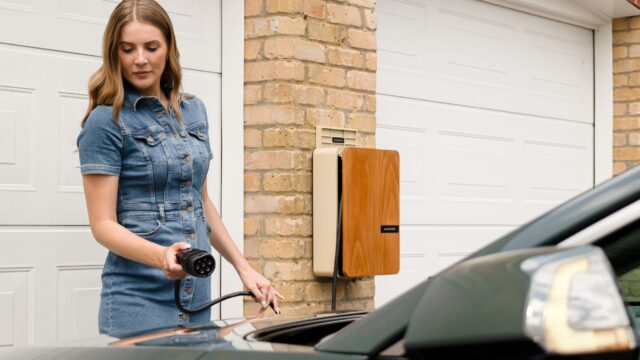
For most drivers, Level 2 at home is the practical choice, and Level 1 can work if you drive little. At about 5 miles of range per hour, 10 hours of Level 1 charging overnight adds about 50 miles, which covers many daily commutes.
Level 2 replaces a full day’s driving overnight. It needs a 240-volt circuit, usually 40 or 50 amps for a 32 to 40 amp charger, installed by a licensed electrician and often with a permit. The AFDC puts residential Level 2 equipment at roughly $380 to $690 before installation, which varies widely with your electrical panel.
Charging at home is also usually the cheapest. Our guide to the cost to charge an EV compares home rates with fast charger prices per 100 miles.
Which plugs do the different levels use?
Level 1 and Level 2 use the J1772 connector on most non-Tesla EVs, and Tesla vehicles use the J3400 connector, also called NACS, for all levels. DC fast chargers use CCS, NACS (J3400) or the older CHAdeMO plug.
Many automakers are moving their cars to the NACS port and now allow access to Tesla Superchargers, some with an adapter. Our explainer on NACS vs CCS charging lists which brands can use Superchargers.
Bottom line
Match the charger to how you drive: Level 2 at home covers daily use, and DC fast charging is for trips. Check your car’s maximum AC and DC rates before paying for a faster charger, and plan fast-charging stops to about 80% to save time.
FAQ
Is DC fast charging bad for the battery?
Frequent fast charging can add heat and wear over time, which is why automakers recommend Level 2 for daily use. Occasional fast charging on trips is what the systems are designed for; follow your owner’s manual.
Can I plug an EV into a regular outlet?
Yes. Most EVs come with or offer a Level 1 cord for a standard 120-volt outlet. Use a dedicated circuit in good condition, not an extension cord.
Should I charge to 100% every night?
Many automakers recommend a daily limit below 100%, such as 80% or 90%, for some battery types, and full charges before trips. Check your owner’s manual, since advice differs by battery chemistry.
Is Level 3 the same as DC fast charging?
Yes. “Level 3” is a common name for DC fast charging, though the official term used by the Department of Energy is DC fast charging.